Common Mistakes When Touring Formal Manor Gardens
A formal manor garden is not a park. It is an argument laid out in gravel, yew and stone, and it expects to be read in a certain order. Most visitors arrive with an hour to spare and a habit of walking briskly toward whatever looks most impressive. That habit costs them most of what the garden has to say.
Treating the Main Axis as a Corridor
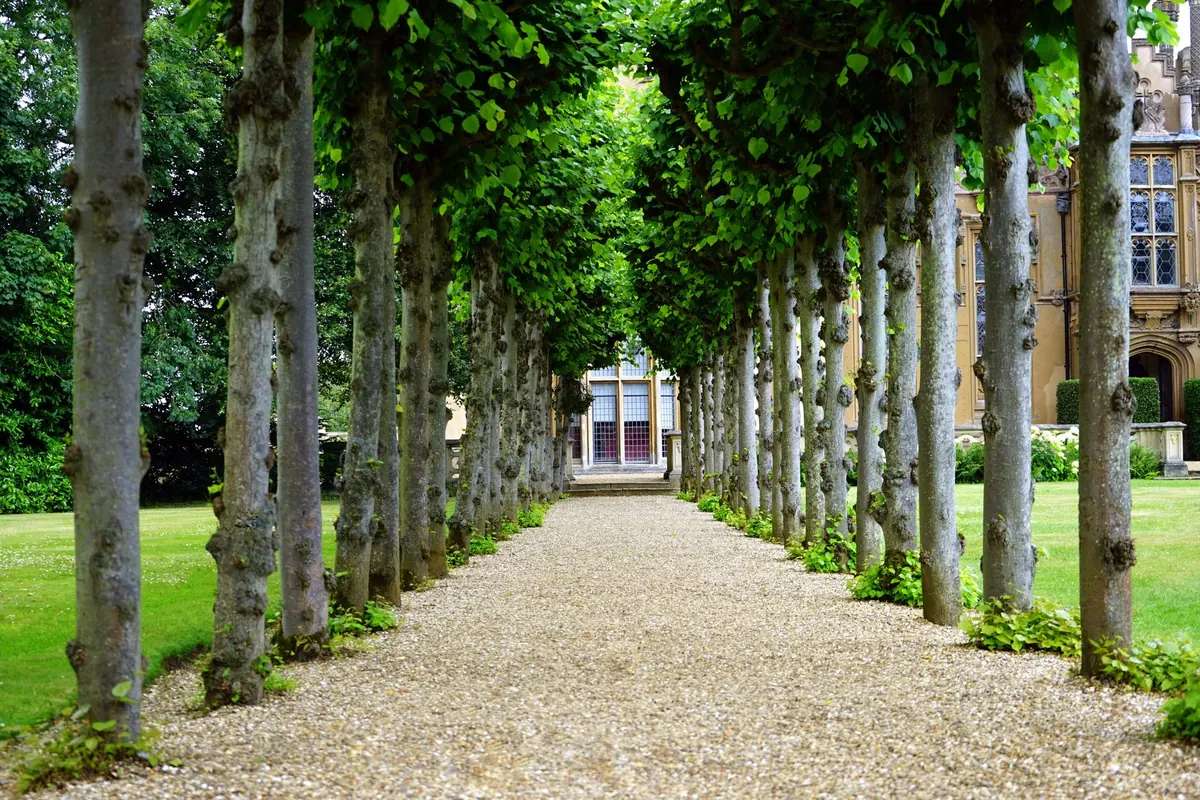
The long central path is the spine of the design, laid out so a visitor would be shown one composed view after another: an urn against a clipped hedge, a gate framing a church tower, a fountain placed where the sightlines converge. Walk it at an indoor pace and you will see a path.
Stop at the first terminal feature — the statue, the iron gate, the steps — and turn around. Half a formal garden's best views exist only in the reverse direction, and almost nobody looks. Then walk the axis back, pausing every ten or twelve paces rather than every fifty.
The cross-paths matter just as much. A formal layout is usually a grid, and the side walks are where the detail lives: espaliered fruit, a stone trough, a small gate leading somewhere unexpected. The main axis tells you what the owner wanted you to feel; the cross-paths show how the garden actually works.
Skipping the Labels
Plant labels are not clutter. They are the closest thing a garden has to a caption, and they tell you what a plant is, how long it has been grown there, and which varieties the head gardener thinks worth the space. A label naming a specific rose is a suggestion you can take home. A named apple tells you what crops on a cold wall.
Photograph the label and the plant in the same frame — a folder of close-up label shots is useless later. Then look at where the label sits. One pushed to the back of a border usually means a shrub that has outgrown its space, which is a lesson in planting distances you can apply in a much smaller garden.
Missing the Walled Sections
Walled gardens are often the best part of a manor visit and the easiest to miss. They sit to one side, past the rose beds or behind a beech hedge, sometimes with their own gate and their own hours. Kitchen gardens, glasshouse ranges and orchards were the working heart of the estate, and they are where the horticulture is most concentrated.
Ask at the ticket desk, with two direct questions:
- Is the walled garden open today, and does it close earlier than the rest of the grounds?
- Is anything off the main route worth seeing — a glasshouse, an ice house, a fernery?
Walls change the climate; that is what they are for. Peaches, figs and tender climbers that fail in an open border will thrive against south-facing brick. If you garden somewhere cooler, study this section with a notebook.
Standing in the Wrong Place
Formal gardens are designed around viewpoints, and visitors routinely stand two metres away from them. If a bench faces a particular direction, someone chose that spot deliberately. Sit on it. If steps lead up to a terrace, climb them and look back down before looking forward; the raised walk usually gives the view the whole layout was planned around.
The same applies to doorways and gates. Pause in the opening rather than walking straight through, and notice what it frames. Designers of the period liked to borrow a distant spire, a hill or a stand of trees and make it part of the composition. From the wrong angle it disappears.
Ignoring the Layers
Manors are rarely of one date. Under the Georgian lawn there may be a Tudor knot garden; Victorian bedding may have replaced something older; a hard winter may have forced a replanting more recent than it looks. Ask about restoration dates, because they change how you read the planting. A yew that looks four hundred years old may be forty.
Season matters as much. One visit shows one version of a garden. The structure — hedges, walls, the shape of the beds — reads clearest in winter, with nothing in the way. Early summer gives roses and wall climbers. Autumn gives the kitchen garden and the park trees.
Forgetting the Edges and the Estate
Many visitors stop at the last border and turn back. Walk on. The boundary is often the most revealing part of the design: a ha-ha that keeps stock out without interrupting the view, a line of limes, a gate pier marking the old approach. Twenty minutes along the park edge explains why the house sits where it does.
Leave the last hour for the quiet places. Walled gardens, glasshouses and far walks empty out before the gates close, and late light on old brick beats another photograph of the front lawn.
A Route That Works for Two Hours
- At the entrance, ask what is open, and mark the walled garden and the furthest gate on the map.
- Walk the main axis end to end without stopping much. Learn the shape of the place.
- Walk it back slowly, pausing at every terminal feature to look behind you.
- Take one cross-path and one perimeter path, even if they look like dead ends.
- Sit somewhere with a view for ten minutes, with no screen in front of you.
- Finish in the walled garden or the glasshouses, then leave along the park edge.
Wear
Photo: Mike Bird / Pexels